
2. Show HN: DAC – open-source dashboard as code tool for agents and humans (github.com)
dac is a dashboard-as-code tool. Build interactive dashboards using YAML and JSX. Built-in semantic layer. Get your agents to build standardized, reviewable dashboards. - bruin-data/dac

4. Refusal in Language Models Is Mediated by a Single Direction (arxiv.org)
Conversational large language models are fine-tuned for both instruction-following and safety, resulting in models that obey benign requests but refuse harmful ones. While this refusal behavior is widespread across chat models, its underlying mechanisms remain poorly understood. In this work, we show that refusal is mediated by a one-dimensional subspace, across 13 popular open-source chat models up to 72B parameters in size. Specifically, for each model, we find a single direction such that erasing this direction from the model's residual stream activations prevents it from refusing harmful instructions, while adding this direction elicits refusal on even harmless instructions. Leveraging this insight, we propose a novel white-box jailbreak method that surgically disables refusal with minimal effect on other capabilities. Finally, we mechanistically analyze how adversarial suffixes suppress propagation of the refusal-mediating direction. Our findings underscore the brittleness of current safety fine-tuning methods. More broadly, our work showcases how an understanding of model internals can be leveraged to develop practical methods for controlling model behavior.
5. I built the Playwright for desktop apps. 80% token savings (github.com)
Native desktop automation CLI for AI agents. Control any application through OS accessibility trees with structured JSON output and deterministic element refs. - lahfir/agent-desktop
6. Little Magazines Are Back (wsjfreeexpression.substack.com)
7. Good developers learn to program. Most courses teach a language (evilgeniuslabs.ca)
A bootcamp can teach you the syntax of a language in six weeks. The part that takes a decade is everything else: where the seams go, where the data flows, which decisions you are stuck with for the life of the codebase. This is a senior developer's argument for what learners should actually be looking for, after thirty years of watching the difference.
9. Flue is a TypeScript framework for building the next generation of agents (flueframework.com)
Agent = Model + Harness. Flue is the TypeScript framework for building modern agents — programmable, deployable anywhere, from chatbots to coding platforms.
10. An unknown Sega Saturn project has come to light after 29 years (32bits.substack.com)
11. Unsigned Sizes: A Five Year Mistake (c3-lang.org)
C3 is a programming language that builds on C
12. K3k: Kubernetes in Kubernetes (github.com)
Kubernetes in Kubernetes. Contribute to rancher/k3k development by creating an account on GitHub.
13. Show HN: Piruetas – A self-hosted diary app I built for my girlfriend (piruet.app)
Piruetas — a private self-hosted journal.
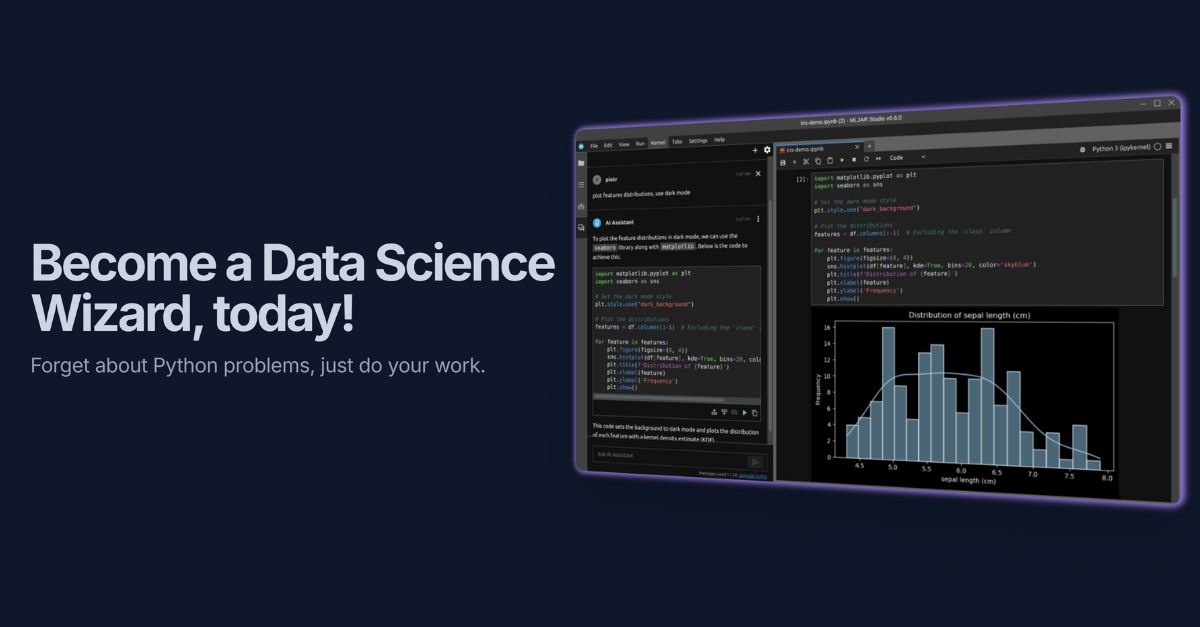
14. Show HN: Mljar Studio – local AI data analyst that saves analysis as notebooks (mljar.com)
MLJAR Studio is a private AI data lab for exploring data, running machine learning experiments, and building analysis tools. Runs locally with optional AI providers.
15. Modern C++ Programming: Busato (github.com)
Modern C++ Programming Course (C++03/11/14/17/20/23/26) - federico-busato/Modern-CPP-Programming
16. Why IPv6 is so complicated (github.com)
A collaborative IPv6 book. Contribute to becarpenter/book6 development by creating an account on GitHub.
17. Bitmap and tilemap generation from a single example (github.com)
Bitmap & tilemap generation from a single example with the help of ideas from quantum mechanics - mxgmn/WaveFunctionCollapse
18. Show HN: Filling PDF forms with AI using client-side tool calling (copilot.simplepdf.com)
AI that helps users fill PDF forms step by step.
19. GameStop Preparing Offer for eBay (www.wsj.com)
20. Direct electrochemical black coffee quality appraisal using cyclic voltammetry (www.nature.com)
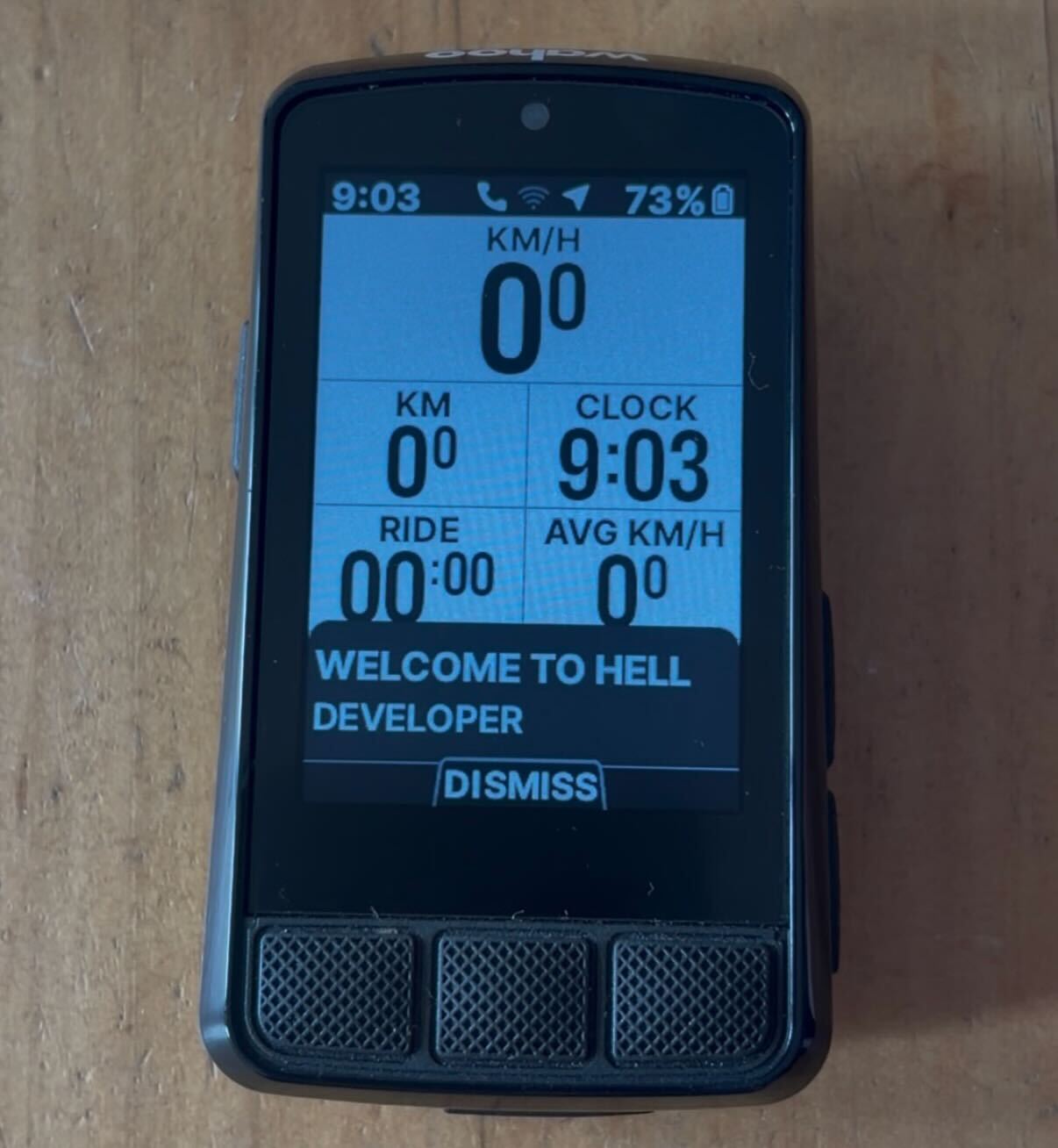
21. Welcome to Hell Developer (noahclements.com)
Reverse engineering the Wahoo ELEMNT Bolt v3 BLE protocol to unlock a hidden developer debug mode

22. Craig Venter of Human Genome Project Dies at 79 (www.economist.com)
The dark horse of the Human Genome Project died on April 29th, aged 79

23. Show HN: Large Scale Article Extract of Newspapers 1730s-1960s (snewpapers.com)
Search 250 years of American newspapers with AI-powered semantic search. Explore millions of historical articles spanning the 1730s to the 1960s.
24. LFM2-24B-A2B: Scaling Up the LFM2 Architecture (www.liquid.ai)
25. Becoming a father shrinks your cerebrum (www.economist.com)
27. A Gopher Meets a Crab (miren.dev)
Notes on fitting Rust in a gopher brain by building a chat server with Tokio.
28. Canonical Under Attack (status.canonical.com)
29. Show HN: Stop playing my matchstick puzzles, start building your own in seconds (mathstick.github.io)
Free online matchstick puzzle game with guaranteed solutions. Solve challenges that get harder as you progress. Create and share your own custom puzzles.
30. What did you love about VB6? (evilgeniuslabs.ca)
Two open questions for anyone who shipped real work on Visual Basic 6 and is now writing C# against modern .NET. What specifically did VB6 get right that you miss? And what do you find frustrating about the modern toolchain that VB6 didn't make you fight? I shipped about a hundred VB3-through-VB6 line-of-business systems between 1995 and 2010, and I'm trying to get to the root of what was actually good before too much of the institutional memory leaves the room.