Prefill-decode (PD) disaggregation has become the standard architecture for large-scale LLM serving, but in practice its deployment boundary is still determined by KVCache transfer. In conventional dense-attention models, prefill generates huge KVCache traffics that keep prefill and decode tightly coupled within a single high-bandwidth network domain, limiting heterogeneous deployment and resource elasticity. Recent hybrid-attention architectures substantially reduce KVCache size, making cross-cluster KVCache transport increasingly plausible. However, smaller KVCache alone does not make heterogeneous cross-datacenter PD serving practical: real workloads remain bursty, request lengths are highly skewed, prefix caches are unevenly distributed, and inter-cluster bandwidth fluctuates. A naive design that fully externalizes prefill can therefore still suffer from congestion, unstable queueing, and poor utilization. We present Prefill-as-a-Service (PrfaaS), a cross-datacenter serving architecture that selectively offloads long-context prefill to standalone, compute-dense prefill clusters and transfers the resulting KVCache over commodity Ethernet to local PD clusters for decode. Rather than treating reduced KVCache as sufficient, PrfaaS combines model-side KV efficiency with system-side selective offloading, bandwidth-aware scheduling, and cache-aware request placement. This design removes the requirement that heterogeneous accelerators share the same low-latency RDMA fabric, enabling independent scaling of prefill and decode capacity across loosely coupled clusters. In a case study using an internal 1T-parameter hybrid model, a PrfaaS-augmented heterogeneous deployment achieves 54% and 32% higher serving throughput than homogeneous PD and naive heterogeneous baselines, respectively, while consuming only modest cross-datacenter bandwidth.
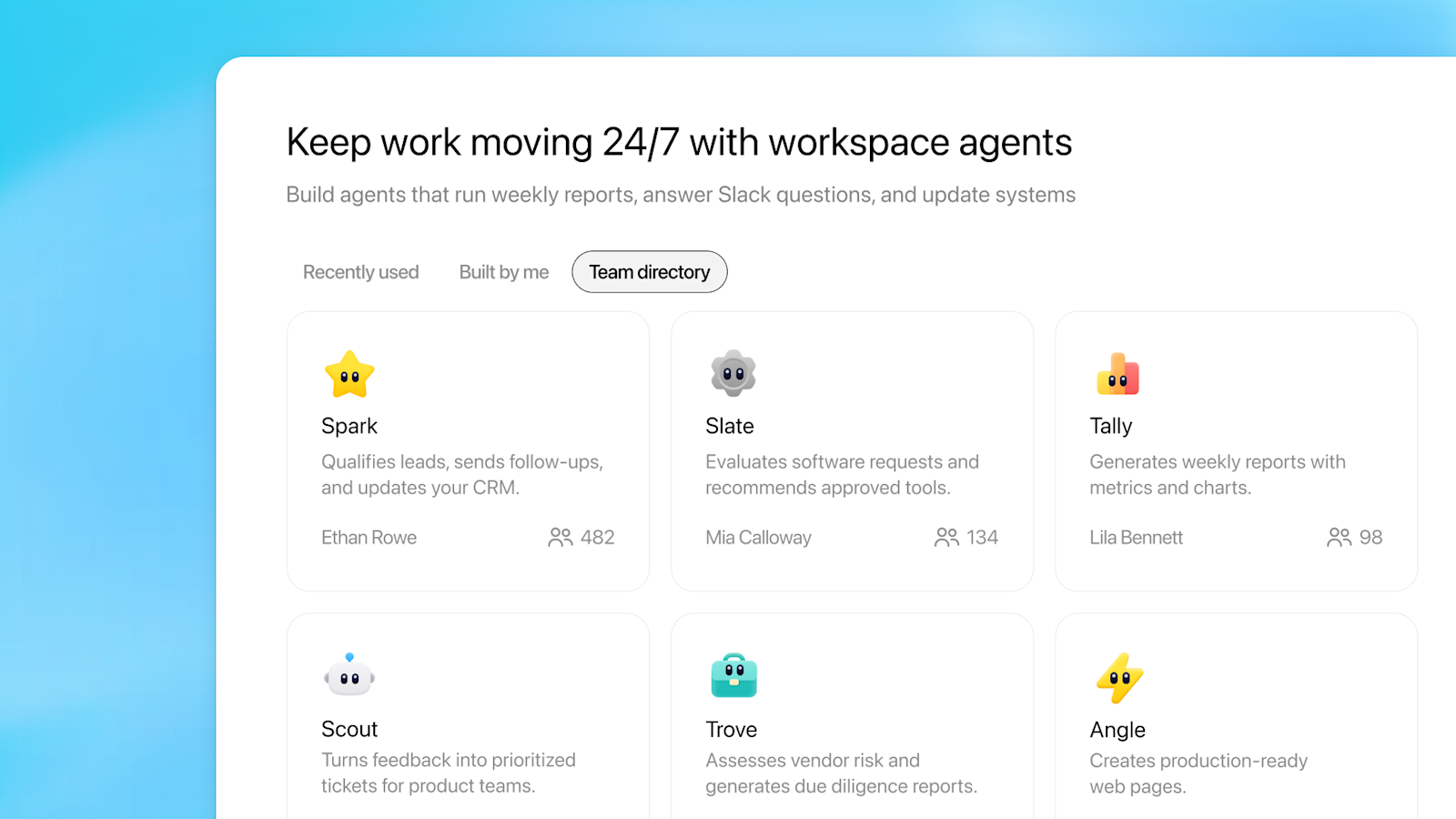
Build workspace agents in ChatGPT that automate multi-step workflows across Slack, Google Drive, Microsoft SharePoint and other enterprise tools—with governance and admin controls.
* Anthropic appears to have removed access to Claude Code for its $20-a-month "Pro" Plans. * Current Pro users appear to still have access via the Claude web app. * Claude Code support documents exclusively refer to accessing Claude Code via "your Max Plan," after previously saying you could access "with
This is the second in a series of posts about anonymous credentials. You can find this first part here. In the previous post, we introduced the notion of anonymous credentials as a technique that a…
Both KV cache and weights modulate activations. Context is software running on frozen hardware. Weight updates redesign the hardware itself. The difference matters more than most people think.
If you’ve been struggling with the high resource overhead of tail sampling, check out retroactive sampling, an approach that significantly reduces sampling overhead for distributed tracing in OpenTelemetry.