5. Investigating How Long-Distance Couples Use Digital Games to Facilitate Intimacy (arxiv.org)

Long-distance relationships (LDRs) have become more common in the last few decades, primarily among young adults pursuing educational or employment opportunities. A common way for couples in LDRs to spend time together is by playing multiplayer video games, which are often a shared hobby and therefore a preferred joint activity. However, games are relatively understudied in the context of relational maintenance for LDRs. In this work, we used a mixed-methods approach to collect data on the experiences of 13 couples in LDRs who frequently play games together. We investigated different values around various game mechanics and modalities and found significant differences in couple play styles, and also detail how couples appropriate game mechanics to express affection to each other virtually. We also created prototypes and design implications based on couples' needs surrounding the lack of physical sensation and memorabilia storage in most popular games.

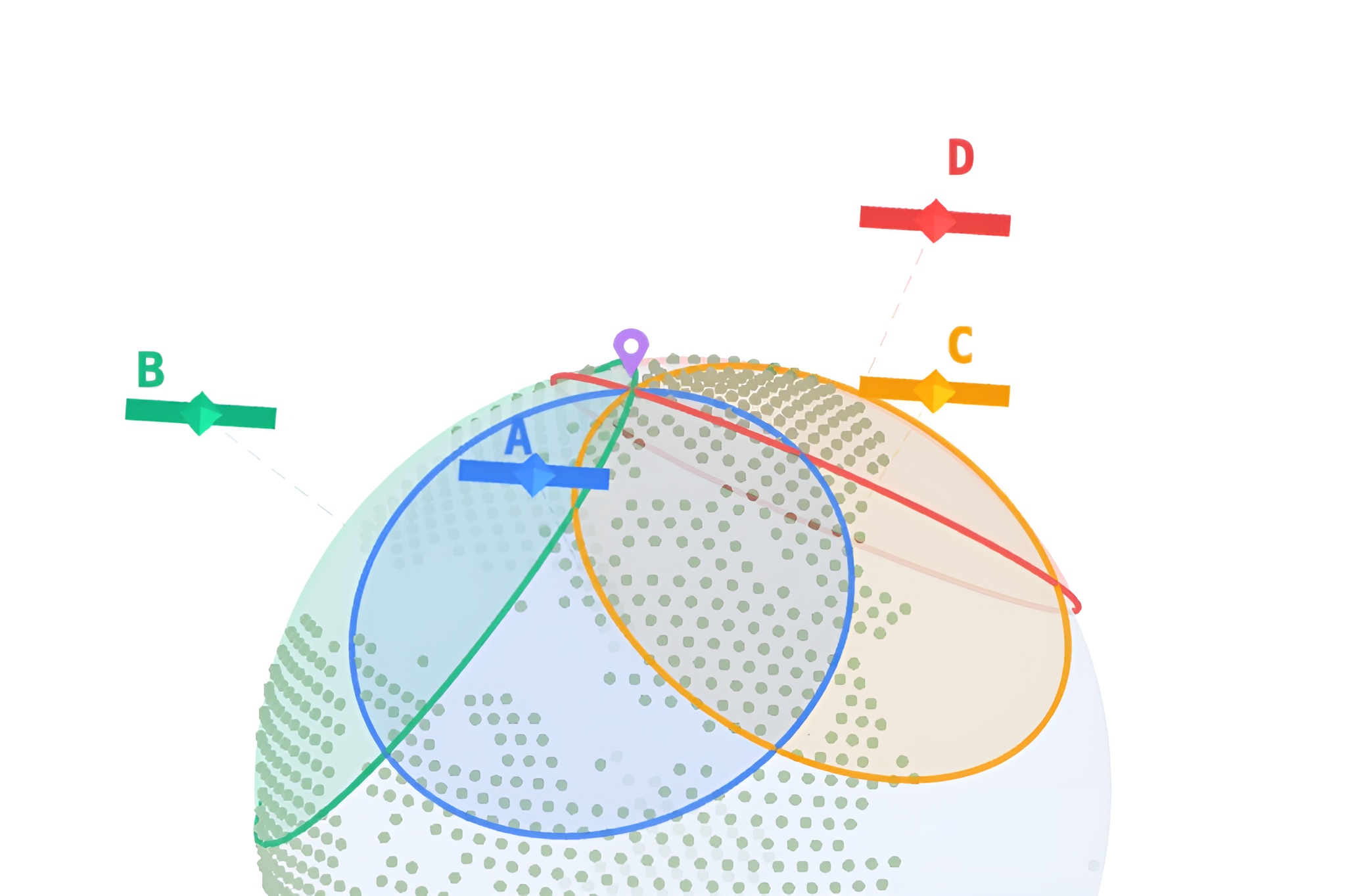
6. The Physics of GPS (perthirtysix.com)

An interactive exploration of how GPS works β€” from the speed of light and trilateration to the cheap clock problem and Einstein

7. Tofolli gates are all you need (www.johndcook.com)

Any Boolean function can be computed with Tofolli gates, and Tofolli gates are reversible, and so any Boolean function can be computed reversibly.

10. Uncharted island soon to appear on nautical charts (www.awi.de)

A 93-strong international expedition team has been exploring the northwestern Weddell Sea in the Antarctic on board the Alfred Wegener Institute's icebreaker Polarstern since 8 February 2026. In this key region for global ocean currents, the focus has been on the outflow of ice and water from the Larsen Ice Shelf and the astonishing sea ice retreat of recent years. When the research work had to be interrupted due to rough weather conditions in order to seek shelter in the lee of Joinville Island, the scientists and ship's crew were surprised by the sudden appearance of an island that had previously only been marked as a danger zone on the available nautical charts.

12. MiniMax M2.7 Is Now Open Source (firethering.com)

MiniMax handed an internal version of M2.7 a programming scaffold and let it run unsupervised. Over 100 rounds it analyzed its own failures, modified its own code, ran evaluations, and decided what to keep and what to revert. The result was a 30% performance improvement with nobody directing each step. That is not a benchmark result. That is a different way of thinking about how AI models get built. M2.7 is now available on HuggingFace with weights you can download and deploy. NVIDIA is offering free API access if you want to try it without the hardware overhead. The license has a commercial limitation worth knowing about, we will get to that.

27. Floyd's Sampling Algorithm (buttondown.com)

I love sampling algorithms. Here's the sampling algorithm that I find most magical. We want to generate a subset of {1, 2, ..., n} of size k. def floyd(n,...

Article Details

Browse by Date

Type to search HN and engineering blog articles
Press Escape to close  |  ↑↓ to navigate  |  Enter to open