What the accidental Claude Code source code leak tells us about the real value of code, product market fit, and why integration is what actually makes software great.
A sum-of-the-parts forecast of SpaceX's fair market value across seven business segments. The $1.75 trillion IPO target is approximately 29% above the median fair value of $1.25 trillion.
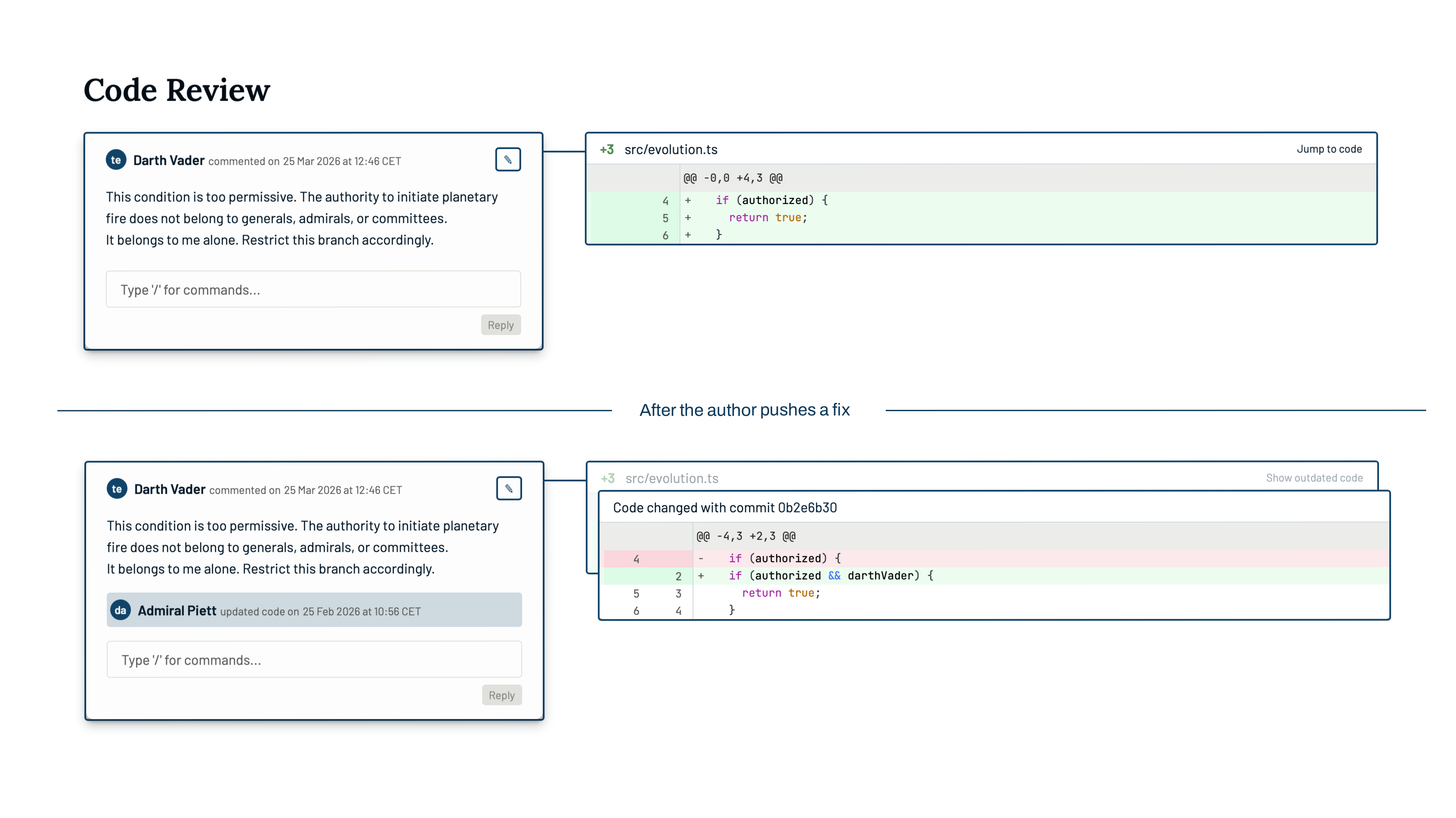
We have significantly improved how code reviews work in Lubeno. We think code review should do more than catch bugs, it should also help teams reduce comprehension debt. In this post, I want to explain how that idea shaped our recent work on code review in Lubeno.
SpaceX is one of the greatest success stories in the aerospace industry. They have completely revolutionized the use of space in launch volumes, price, and s...
MSI shipped a genuinely good motherboard and forgot to wire one chip, so PWM doesn't work. Instead of tossing the board or living with the noise, I decided to make lemonade.
We propose Zero-Error Horizon (ZEH) for trustworthy LLMs, which represents the maximum range that a model can solve without any errors. While ZEH itself is simple, we demonstrate that evaluating the ZEH of state-of-the-art LLMs yields abundant insights. For example, by evaluating the ZEH of GPT-5.2, we found that GPT-5.2 cannot even compute the parity of a short string like 11000, and GPT-5.2 cannot determine whether the parentheses in ((((()))))) are balanced. This is surprising given the excellent capabilities of GPT-5.2. The fact that LLMs make mistakes on such simple problems serves as an important lesson when applying LLMs to safety-critical domains. By applying ZEH to Qwen2.5 and conducting detailed analysis, we found that while ZEH correlates with accuracy, the detailed behaviors differ, and ZEH provides clues about the emergence of algorithmic capabilities. Finally, while computing ZEH incurs significant computational cost, we discuss how to mitigate this cost by achieving up to one order of magnitude speedup using tree structures and online softmax.