
2. How to Turn Anything into a Router (nbailey.ca)
I don't like to cover "current events" very much, but the American government just revealed a truly bewildering policy effectively banning import of new consumer router models. This is ridiculous for many reasons, but if this does indeed come to pass it may be beneficial to learn how to "homebrew" a router.
Fortunately, you can make a router out of basically anything resembling a computer.
I've used a linux powered mini-pc as my own router for many years, and have posted a few times before about how to make linux routers and firewalls in that time.
Fortunately, you can make a router out of basically anything resembling a computer.
I've used a linux powered mini-pc as my own router for many years, and have posted a few times before about how to make linux routers and firewalls in that time.
3. Don't let AI write for you (alexhwoods.com)
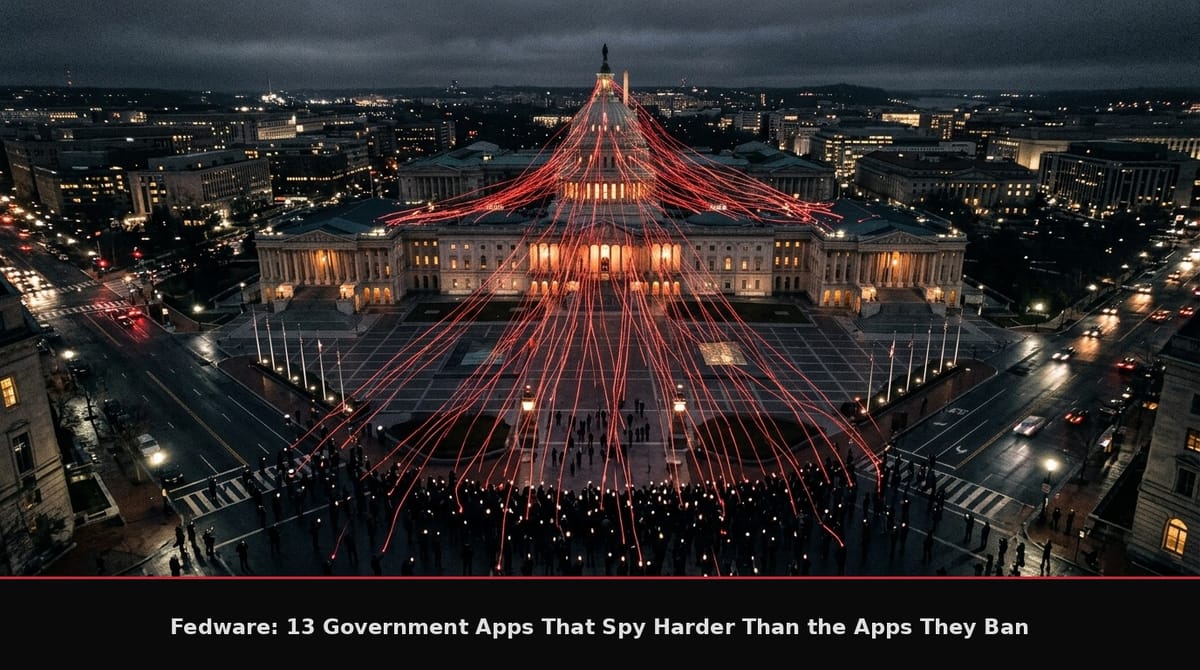
4. Fedware: Government Apps That Spy Harder Than the Apps They Ban (www.sambent.com)
The White House app ships with a sanctioned Chinese tracking SDK, the FBI app serves ads, and FEMA wants 28 permissions to show you weather alerts.
5. CodingFont: A game to help you pick a coding font (www.codingfont.com)

6. Philly courts will ban all smart eyeglasses starting next week (www.inquirer.com)
The First Judicial District of Pennsylvania said the rule is designed to protect witnesses and jurors from intimidation.

7. Turning a MacBook into a touchscreen with $1 of hardware (2018) (anishathalye.com)
We turned a MacBook into a touchscreen using only $1 of hardware and a little bit of computer vision.

8. How the AI Bubble Bursts (martinvol.pe)
The catalysts for a crash are already laid out, and it can happen sooner than most expect. AI is here to stay. If used right, chances are it will make us all more productive. That, on the other hand, does not mean it will be a good investment. Big tech doesn’t need to win, just outspend Magnificent 7 companies are increasing capex to their biggest ever to differentiate their tech from each other and the big AI labs, but the key realization is that they don’t have to spend it to win. It’s a defensive move for them, if they commit $50B, OpenAI and Anthropic need to go raise $100B each to stay competitive, which makes them reliant on investors’ money. As the numbers get bigger, the amount of funds that can write checks of the size required to fill such amounts gets smaller. And many of them are now getting bombed in the Gulf. This is the reason there’s a push for IPOs, it’s because it’s the only option left to keep the funding coming. Taking this into account, Google is extremely well positioned to weather the storm. When they announce capex expenditure, they don’t spend it overnight. They can simply deploy month by month until their competitors struggle to raise and get forced to capitulate. At that point they can just ramp down the spending and declare victory in a cornered market. They don’t need capex, they just need to make it very clear for everyone that nobody can outspend them. It is hard to picture as numbers get so big, but Alphabet (Google’s parent) is ten times more valuable than the biggest military company 1. This also has a great implication for the Mag 7, especially Google: their capex will be a lot smaller in practice than projected, and as investors hate to see high capex in tech, the market will probably reward that if it materializes. As of March 2026, Alphabet’s market cap is ~$2T while Lockheed Martin’s is ~$120B. ↩
9. The Curious Case of Retro Demo Scene Graphics (www.datagubbe.se)

10. "Over 1.5 million GitHub PRs have had ads injected into them by Copilot" (www.neowin.net)
It was inevitable. After three years in the ad-free
"honeymoon" phase, ads are slowly creeping into generative AI products, including Copilot.
"honeymoon" phase, ads are slowly creeping into generative AI products, including Copilot.
11. Parrots pack twice as many neurons as primate brains of the same mass (www.dhanishsemar.com)
A kea parrot in New Zealand learned to drag traffic cones onto a highway so cars would stop and humans would feed it. That sent me down a rabbit hole on how we actually measure bird intelligence.

12. New Washington state law bans noncompete agreements (www.seattletimes.com)
Washington Gov. Bob Ferguson recently signed a law that makes noncompete agreements illegal statewide.
13. Android Developer Verification (android-developers.googleblog.com)
14. Cherri – programming language that compiles directly to a Apple Shortuct (github.com)
Siri Shortcuts Programming Language 🍒. Contribute to electrikmilk/cherri development by creating an account on GitHub.

15. I am definitely missing the pre-AI writing era (www.lesswrong.com)
Yesterday, I wrote my first technical draft on what I was working on with the goal to share it publicly on here (well using an account dedicated to t…

16. FTC Action Against Match and OkCupid for Deceiving Users, Sharing Personal Data (www.ftc.gov)
The Federal Trade Commission is taking action against OkCupid and its affiliate Match Group Americas over allegations OkCupid deceived users of its dating app by sharing their personal information,
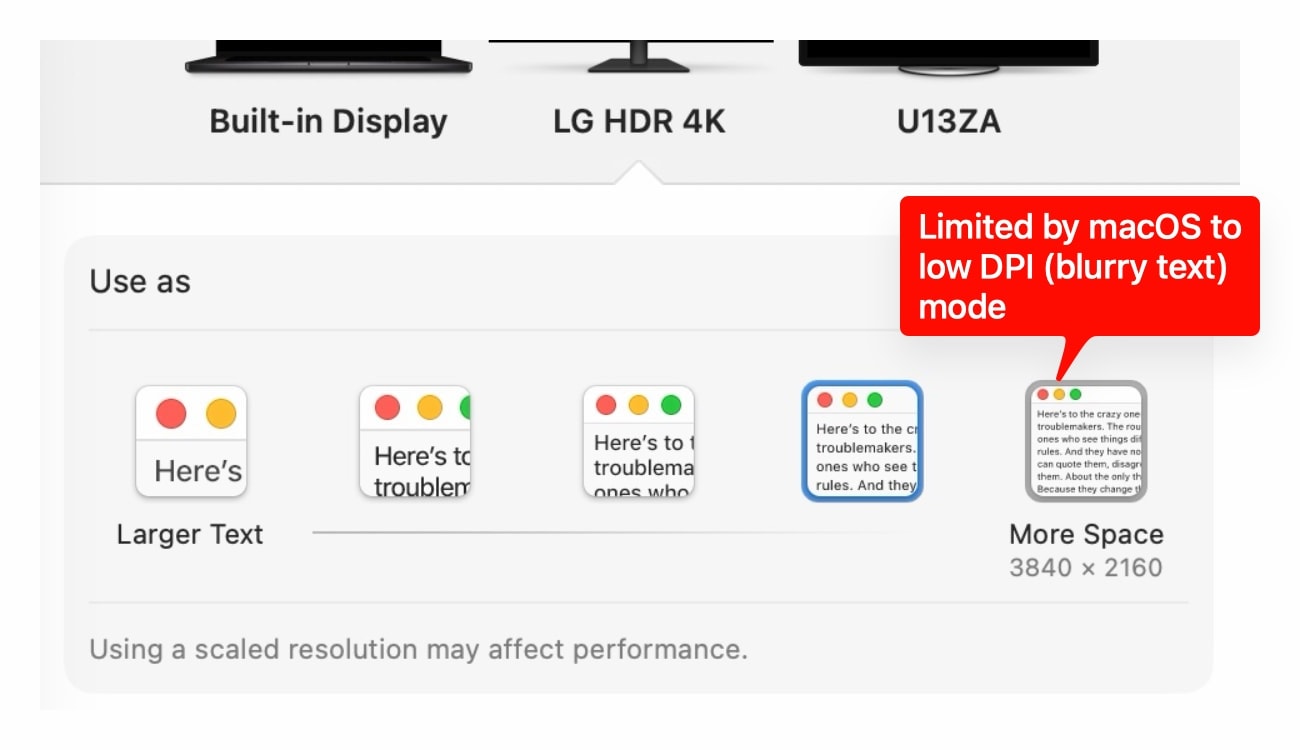
17. New Apple Silicon M4 and M5 HiDPI Limitation on 4K External Displays (smcleod.net)
A regression in external display support on Apple Silicon M4/M5 generation chips prevents full HiDPI modes on 4K monitors, limiting users to either blurry non-HiDPI or reduced workspace HiDPI.

18. 15 years, one server, 8GB RAM and 500k users – how Webminal refuses to die (community.webminal.org)
The server webminal.org runs on a single CentOS Linux box with 8GB RAM. That’s it. No Kubernetes, no microservices, no auto-scaling. One server since 2011. It has survived: A datacenter fire in 2021 (we lost 150k user accounts) Multiple power outages in the Netherlands That one time in 2017 when a Spanish tech blog sent 10,000 users in one day My friend Freston’s insistence that Slackware is the only real distro The idea The idea was simple. I was sitting at my Windows machine at work, wantin...
20. I use excalidraw to manage my diagrams for my blog (blog.lysk.tech)

21. Learn Claude Code by doing, not reading (claude.nagdy.me)
11 interactive modules take you from first slash command to building plugins — with terminal simulators, config builders, and quizzes.
22. Vulnerability Research Is Cooked (sockpuppet.org)
23. Claude Code runs Git reset –hard origin/main against project repo every 10 mins (github.com)
Summary Claude Code performs git fetch origin + git reset --hard origin/main on the user's project repo every 10 minutes via programmatic git operations (no external git binary spawned). This silen...
24. Show HN: 30u30.fyi – Is your startup founder on Forbes' most fraudulent list? (30u30.fyi)
We track the burn, the hype, and the inevitable pivot to litigation.

25. Mathematical methods and human thought in the age of AI (arxiv.org)
Artificial intelligence (AI) is the name popularly given to a broad spectrum of computer tools designed to perform increasingly complex cognitive tasks, including many that used to solely be the province of humans. As these tools become exponentially sophisticated and pervasive, the justifications for their rapid development and integration into society are frequently called into question, particularly as they consume finite resources and pose existential risks to the livelihoods of those skilled individuals they appear to replace.
In this paper, we consider the rapidly evolving impact of AI to the traditional questions of philosophy
with an emphasis on its application in mathematics and on the broader real-world outcomes of its more general use. We assert that artificial intelligence is a natural evolution of human tools developed throughout history to facilitate the creation, organization, and dissemination of ideas, and argue that it is paramount that the development and application of AI remain fundamentally human-centered. With an eye toward innovating solutions to meet human needs, enhancing the human quality of life and expanding the capacity for human thought and understanding, we propose a pathway to integrating AI into our most challenging and intellectually rigorous fields to the benefit of all humankind.
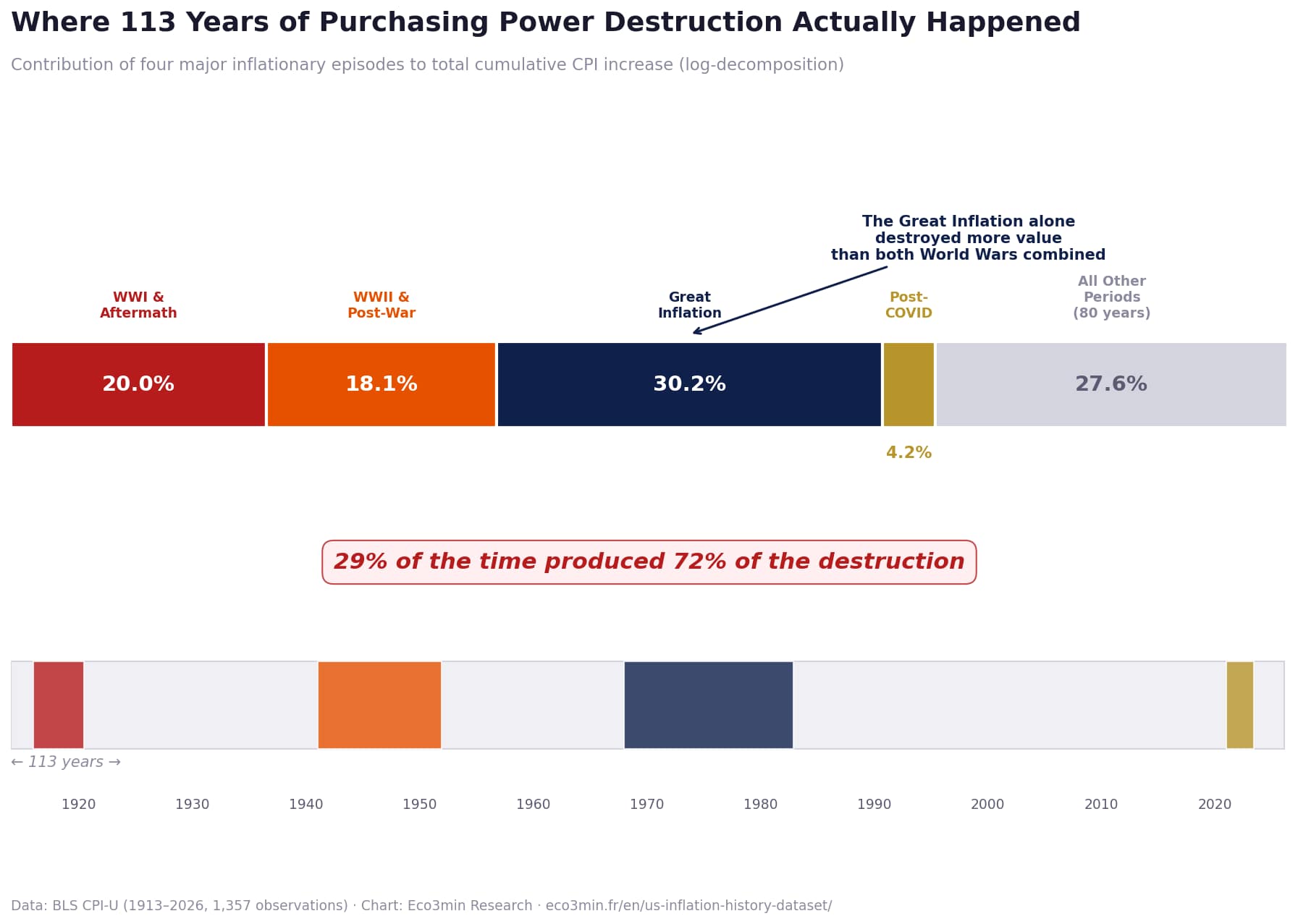
26. 72% of the dollar's purchasing power was destroyed in just four episodes (eco3min.fr)
The US dollar lost 96.9% of its value since 1914. Four inflationary episodes spanning 29% of the time caused 72% of the destruction. Monthly dataset, 1,357 obs.
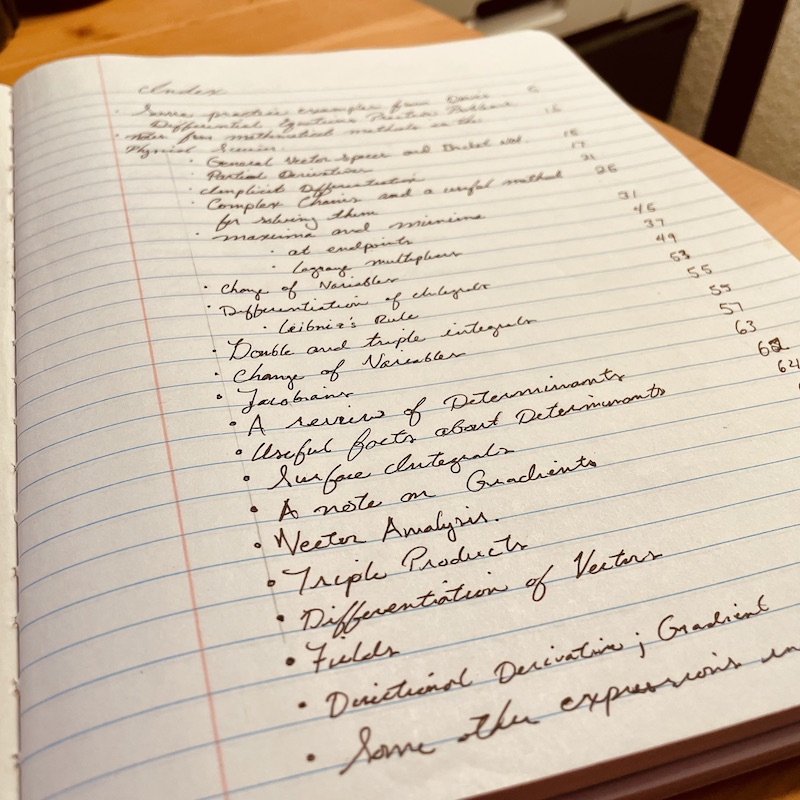
27. Take Better Notes, by Hand (brianschrader.com)
28. Hamilton-Jacobi-Bellman Equation: Reinforcement Learning and Diffusion Models (dani2442.github.io)
Why the HJB is Bellman

29. VHDL's Crown Jewel (www.sigasi.com)
How VHDL preserves determinism In this post, I would like to talk about VHDL’s crown jewel: how it preserves determinism in a concurrent language. Here is a figure of how it works:
30. Ghostmoon.app – The Swiss Army Knife for your macOS menu bar (www.mgrunwald.com)
Every feature you need. Two clicks away. The essential powertool for macOS.