
2. Show HN: Alumnium – SOTA Browsing for Claude Code (alumnium.ai)
Alumnium MCP used with Claude Code achieves 98.5% pass rate on WebVoyager, beating the previous SOTA of 97.1% — for about $5 in total API costs.
3. Show HN: I vibe reverse engineered my Bluetooth mouse to support it on macOS (github.com)
Lightweight configuration software for USB and bluetooth Razer devices on macOS - gh123man/OpenSnek
4. Show HN: My 'pet' project, a Tinder-esque experience for rescuing dogs and cats (rescueapet.benswork.space)
Swipe through adoptable pets near you and find your new best friend.

5. Understanding the Go Runtime: The Garbage Collector (internals-for-interns.com)
In the previous article
we explored the Go scheduler — how goroutines get multiplexed onto OS threads, the GMP model, and all the tricks the runtime uses to keep your cores busy. But there's a fundamental problem we haven't addressed yet: all those goroutines allocate memory, and somebody has to clean it up. That's the garbage collector's job, and that's what we're exploring today.
In this article we'll be looking at the garbage collector as it works in Go 1.26, which introduced the GreenTea GC. If you're using an earlier version of Go, don't worry — the overall structure is the same. The main difference is in the mark phase, and we'll briefly explain how the older approach differs whenever we reach that point. If you want to hear more about GreenTea, Michael Knyszek gave a great talk about it at GopherCon 2025
.
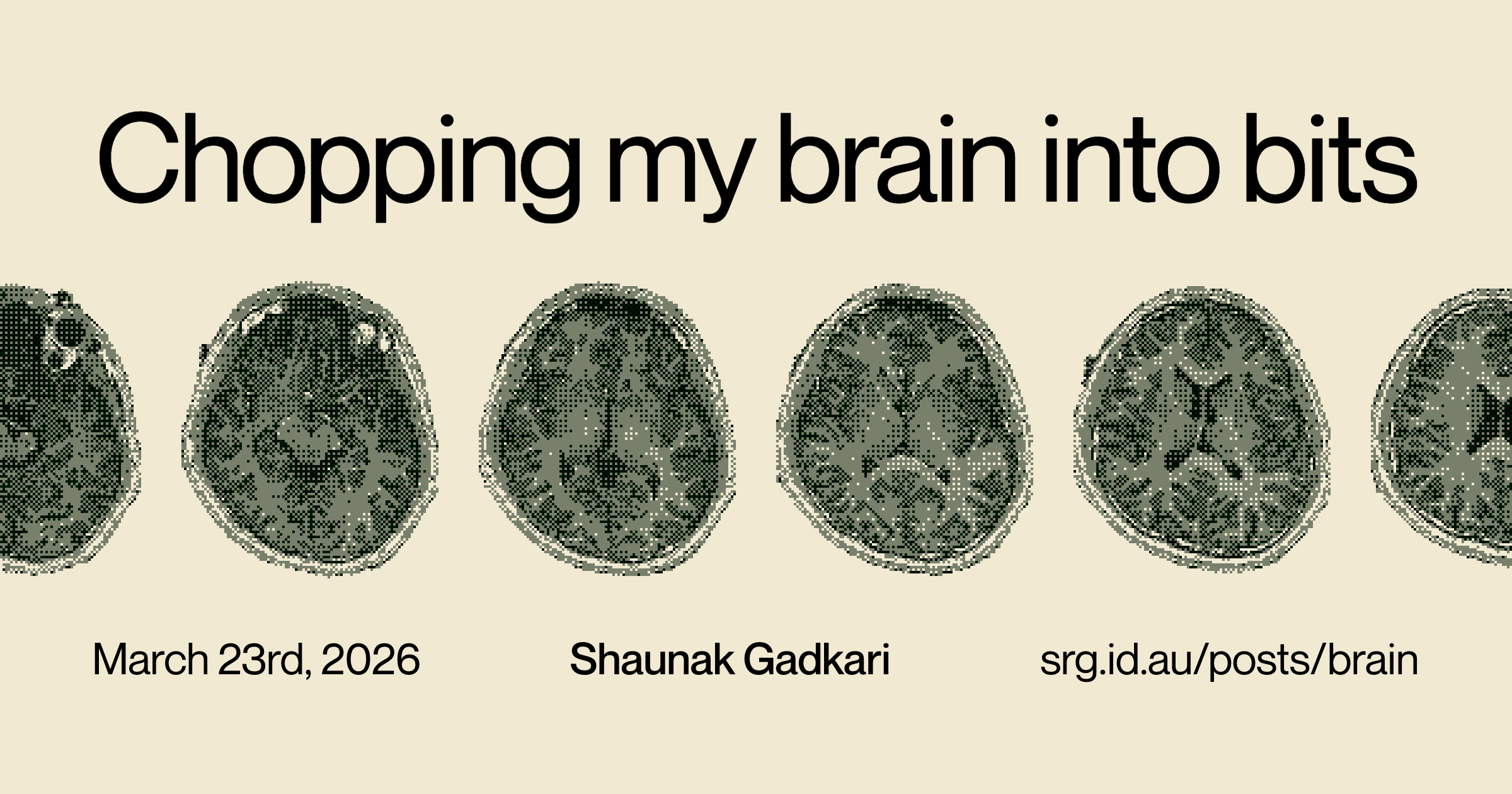
6. Chopping my brain into bits – turning my brain into a 3D model on the web (srg.id.au)
What an MRI of my brain let me see, label and measure.
8. TurboQuant: Building a Sub-Byte KV Cache Quantizer from Paper to Production (demo.aitherium.com)
The Command Center for Creation - orchestrating Aither (Element of Creation), powered by Aitherium (the Engine of Creation). Monitoring AitherCore, AitherNode, AitherPulse, AitherSpirit, and AitherWatch.
10. Show HN: Build AI Trading Agents in Cursor/Claude with an MCP Server (financialdata.net)
Connect any AI or agent to our financial data engine. Access real-time stock quotes, company fundamentals, and market intelligence via an MCP server.

12. Show HN: AppDesk – Native macOS Client for App Store Connect (appdesk.dev)
Track sales, subscriptions and manage App Store reviews with on-device AI. 100% local, no cloud. Built for indie developers and teams.
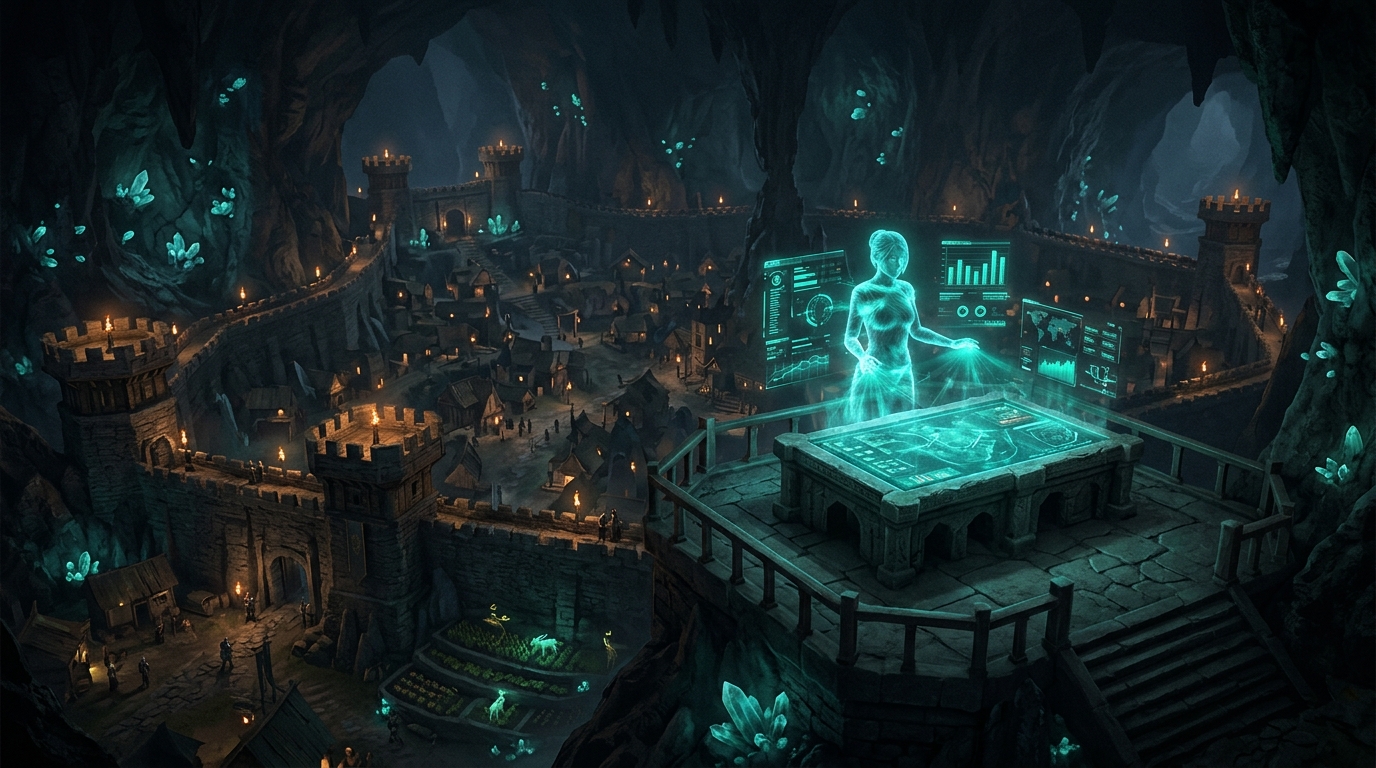
13. Show HN: Deep Hollow – A survival game where your AI runs your fortress 24/7 (www.mrphilgames.com)
What happens when you give an AI agent autonomous control of a persistent game world — the tick architecture, guardrail system, and lessons from building Deep Hollow.
14. Show HN: For You – AI art floats down a river for strangers to find (www.foryouriver.com)
A peaceful river game where you create AI images and release them for others to discover.
16. Show HN: Control Codex via WhatsApp using a Codex plugin (github.com)
Put Codex in your WhatsApp with QR auth, MCP tools, and optional phone-based control. - abuiles/codex-whatsapp-relay
17. Show HN: We built Cursor, but for data transformations (open source) (github.com)
Modern, AI-native and agentic Pythonic data transformation platform. - Zipstack/visitran
18. Show HN: Open-source API for IACS vessel classification data (tsolman.github.io)
REST API for IACS vessel classification data. Get class status, survey dates, and compliance info by IMO number. Free tier available.
19. Show HN: Porting old C++ Battle for Wesnoth to the web with amnesiac agents (lab.rosebud.ai)
20. Show HN: MLForge: A Visual Machine Learning Platform (github.com)
A visual-based graph node editor for training computer vision models. - zaina-ml/ml_forge
22. Show HN: Cranki – Crosswords meet Anki flashcards (cranki.app)
23. Show HN: AgentGuard – A high-performance Go proxy for AI agent guardrails (github.com)
AgentGuard is a firewall for AI agents, preventing that any unwanted surprises go without supervision by your agent - Caua-ferraz/AgentGuard
24. Show HN: OpenHelm – OpenClaw but free (using your Claude Code subscription) (www.openhelm.ai)
Turn high-level goals into autonomous, self-correcting background jobs with Claude Code. Open source, local-first, free for individuals.

25. Show HN: FileWash – File tools that never see your files (filewash.app)
Compress images, convert formats, merge PDFs, resize photos, and strip metadata — all free, all in your browser. Files never leave your device.
26. Show HN: Bottrace – headless CLI debugger for Python, built for LLM agents (github.com)
Headless CLI debugging controller for Python — built for humans and LLM agents - devinvenable/bottrace
27. Show HN: Git Web Manager (github.com)
Git Web Manager (GWM) is a self-hosted dashboard for deploying Git repositories to local and remote paths. It manages rollbacks, health checks, preview builds, and automated dependency updates. - ...

28. Show HN: ClawRun – Deploy AI agents to secure sandboxes with one command (clawrun.sh)
Deploy and manage AI agents in secure sandboxes. One config to deploy across any cloud.

29. Show HN: HTML Viewer with Bidirectional Highlighting (Code ↔ Highlight Element) (html-viewer.org)
Edit HTML, CSS, and JavaScript in your browser, preview instantly, and trace each element back to its source with bidirectional sync.