
2. We Haven't Seen the Worst of What Gambling and Prediction Markets Will Do (www.derekthompson.org)

3. Personal Encyclopedias (whoami.wiki)
your personal encyclopedia, written by agents

4. End of "Chat Control": EU Parliament Stops Mass Surveillance in Voting Thriller (www.patrick-breyer.de)
The controversial mass surveillance of private messages in Europe is coming to an end. After the European Parliament had already rejected the indiscriminate and blanket Chat Control by US tech companies on 13 March, conservative forces attempted a democratically highly questionable maneuver yesterda
5. Moving from GitHub to Codeberg, for lazy people (unterwaditzer.net)
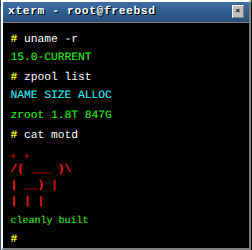
6. Shell Tricks That Make Life Easier (and Save Your Sanity) (blog.hofstede.it)
Watch someone backspace 40 characters instead of pressing CTRL+W, and you’ll understand why this list exists. A collection of shell tricks-grouped by what works everywhere and what’s Bash/Zsh-speci...

7. European Parliament decided that Chat Control 1.0 must stop (bsky.app)
You did it! 🥳
European Parliament just decided that Chat Control 1.0 must stop.
This means on April 6, 2026, Gmail, LinkedIn, Microsoft and other Big Techs must stop scanning your private messages in the EU. #PrivacyWins 💪
[contains quote post or other embedded content]
European Parliament just decided that Chat Control 1.0 must stop.
This means on April 6, 2026, Gmail, LinkedIn, Microsoft and other Big Techs must stop scanning your private messages in the EU. #PrivacyWins 💪
[contains quote post or other embedded content]

8. My minute-by-minute response to the LiteLLM malware attack (futuresearch.ai)
The full Claude Code transcript from discovering and responding to the litellm 1.82.8 PyPI supply chain attack on March 24, 2026 — from mysterious process explosions to malware identification to public disclosure.
9. Olympic Committee bars transgender athletes from women’s events (www.nytimes.com)
10. False claims in a widely-cited paper. No corrections. No consequences (statmodeling.stat.columbia.edu)
11. Show HN: I put an AI agent on a $7/month VPS with IRC as its transport layer (georgelarson.me)
A lightweight AI agent that answers questions about my work by reading actual code. Architecture, security, and model selection decisions.
12. Swift 6.3 Released (www.swift.org)
13. Doom entirely from DNS records (github.com)
Play Doom entirely from DNS records. (PowerShell 7+) - resumex/doom-over-dns
14. New York City hospitals drop Palantir as controversial AI firm expands in UK (www.theguardian.com)
The decision follows activist pressure as Palantir faces growing scrutiny over NHS and UK government deals
15. John Bradley, author of xv, has passed away (gab.com)

16. Landmark L.A. jury verdict finds Instagram, YouTube were designed to addict kids (www.latimes.com)
The outcome Wednesday in Los Angeles County Superior Court is potentially precedent-setting for thousands of other pending lawsuits nationwide and could reshape how tech companies are held accountable for children's harm caused by their products.

17. From zero to a RAG system: successes and failures (en.andros.dev)
A few months ago I was tasked with creating an internal tool for the company's engineers: a Chat that used a local LLM. Nothing extraordinary so far.
18. We Rewrote JSONata with AI in a Day, Saved $500K/Year (www.reco.ai)

19. Data is everywhere. The government is buying it without a warrant (www.npr.org)
Data brokers buy up huge amounts of information from cell phones and browsers to sell for targeted advertising. But the government, including ICE, also buys the data.

20. CERN to host Europe's flagship open access publishing platform (home.cern)
In an important step for open science, CERN has been selected to host a new phase of Open Research Europe (ORE), an initiative supported by the European Commission and a new funding consortium of European national funding agencies and research organisations. Aligned with the Action Plan for Diamond Open Access (2022)[1], the initiative is a community-led alternative to traditional academic publishing. When the new ORE platform is launched later this year, authorship eligibility will be expanded to include researchers affiliated with institutions in the countries that participate in the consortium. Publishing will remain completely free for both European Commission-funded researchers and authors from participating countries. The aim is to promote equity, diversity and transparency in scholarly communication while maintaining high standards of quality and integrity. The ORE funding consortium currently comprises members from Austria, France, Germany, Italy, the Netherlands, Norway, Portugal, Slovenia, Spain, Sweden and Switzerland[2]. The European Commission participates as a permanent observer in the governance body and provides dedicated financial support. CERN will provide the technical and operational infrastructure for the platform, built on the open source software Open Journal Systems (OJS), while governance and editorial oversight will remain the responsibility of the ORE consortium. ORE follows the innovative publish–review–curate model, which promotes rigour and transparency in the publishing of research. Articles are first checked for integrity and compliance, then published and peer-reviewed openly. Peer-review reports are made public, and articles that successfully pass review are curated into subject-specific collections. This approach combines quality assurance with openness, while also enabling post-publication review. Launched by the European Commission in 2021 to provide beneficiaries of EU research programmes with a no-fee open access publishing platform[3], ORE was designed to make publicly funded research more transparent, accessible and sustainable through an innovative publishing model. In the five years since its launch, the platform has seen steady growth and uptake across the research community, with more than 1,200 articles published and over 6,300 authors from more than 3,000 institutions worldwide taking part. CERN’s role in operating ORE builds on its long-standing experience in developing and maintaining open science infrastructures and community-governed services for the global research community. By hosting ORE, CERN will provide a neutral, reliable and sustainable environment, drawing on expertise gained through flagship open science initiatives such as Zenodo, Invenio and SCOAP3. “For CERN, hosting Open Research Europe is a natural extension of our commitment to an open, community-led scientific infrastructure,” said Mar Capeáns, CERN Director for Site Operations. “The platform supports the rapid sharing of research, while reinforcing Europe’s ability to shape the future of scholarly communication.” “Open Research Europe is a strong example of a shared commitment to fostering the free flow of knowledge across the European Research Area and beyond”, stated Marc Lemaître, Director-General for Research and Innovation (DG RTD), European Commission. “By ensuring open access to high-quality research, ORE facilitates the circulation of the latest research findings and amplifies public trust in science. Today, as European research funders and research organisations join forces to support ORE, we open a new chapter, one that strengthens open access scholarly publishing and improves research practices across Europe”. Beyond the technical infrastructure, the initiative is expected to deepen collaboration between CERN, the European Commission, national representatives and research organisations. Working in partnership with the OPERAS Research Infrastructure, outreach and engagement activities will be expanded across Europe to attract eligible authors to the platform. ORE is expected to support a growing number of research outputs each year, making publicly funded science more accessible and transparent while setting a benchmark for equitable publishing initiatives in Europe and beyond. More information on the future platform at: https://ore.eu [1] https://scienceeurope.org/our-resources/action-plan-for-diamond-open-access/ [2] Austrian Science Fund (FWF), European Organization for Nuclear Research (CERN), French National Research Agency (ANR), French National Centre for Scientific Research (CNRS), German Federal Ministry for Research, Technology and Space (BMFTR), Italian Ministry of Universities and Research (MUR), Dutch Research Council (NWO), Research Council of Norway (RCN), Foundation for Science and Technology, Portugal (FCT), Slovenian Research and Innovation Agency (ARIS), Swedish research funders (Forte, Formas and the Swedish Research Council), Spanish Foundation for Science and Technology (FECYT), Spanish National Research Council (CSIC), Swiss National Science Foundation (SNSF) [3] Current platform (operational till fall 2026): https://open-research-europe.ec.europa.eu

21. Obsolete Sounds (citiesandmemory.com)
The world's biggest collection of obsolete sounds and disappearing sounds - remixed and reimagined by artists all over the world.
22. HyperAgents: Self-referential self-improving agents (github.com)
Self-referential self-improving agents that can optimize for any computable task - facebookresearch/HyperAgents

23. The truth that haunts the Ramones: 'They sold more T-shirts than records' (english.elpais.com)
It’s been 50 years since the debut album of the group that invented punk, although their legacy in style and merchandising eclipsed their actual success on stage

25. Marriage over, €100k down; AI users whose lives were wrecked by delusion (www.theguardian.com)
One minute, Dennis Biesma was playing with a chatbot; the next, he was convinced his sentient friend would make him a fortune. He’s just one of many people who lost control after an AI encounter

26. Deploytarot.com – tarot card reading for deployments (deploytarot.com)
Draw your deployment tarot reading. Pick your role, pick your intent, and let the Major Arcana decide if today is your day.
27. Show HN: Turbolite – a SQLite VFS serving sub-250ms cold JOIN queries from S3 (github.com)
SQLite VFS with sub-50ms cold queries from S3 + page-level compression and encryption - russellromney/turbolite
28. OpenTelemetry Profiles Enters Public Alpha (opentelemetry.io)
Since OpenTelemetry first introduced Profiles, momentum has only grown towards building a unified industry standard for continuous production profiling, standing alongside traces, metrics, and logs. Today, the Profiling SIG is proud to announce that the Profiles signal has officially entered public Alpha, and we are ready for broader community use and feedback.
Production profiling for all Continuously capturing low-overhead performance profiles in production is a technique that has been used for decades. It helps troubleshoot production incidents, improves user experience by making software faster and reduces computation costs by making the same work take less resources. Historically, the industry lacked a common framework and protocol for continuous profiling, even with formats like JFR and pprof being popular.
Production profiling for all Continuously capturing low-overhead performance profiles in production is a technique that has been used for decades. It helps troubleshoot production incidents, improves user experience by making software faster and reduces computation costs by making the same work take less resources. Historically, the industry lacked a common framework and protocol for continuous profiling, even with formats like JFR and pprof being popular.
29. LibreOffice and the Art of Overreacting (blog.documentfoundation.org)
A donation banner is not an attack to users The announcement that LibreOffice 26.8 will feature a donation banner in the Start Centre has prompted a flood of responses, ranging from positive from many FOSS supporters, who understand the need for funding, to mild apprehension to extreme alarm from others. Some articles have described the change as an “aggressive fundraising campaign” and suggested that it is part of a dangerous trend towards “freemium” models and paid features. However, it is worth taking a step back to analyse what is actually being introduced and the broader context that many of these comments have ignored. The banner will appear in the Start Centre – the screen that greets users when they launch LibreOffice without opening a specific document – and will occupy roughly the bottom quarter of the screen. It will not block any functionality, nor will it restrict access to any features. According to the implementation plan, it will appear periodically, but not at every launch. That is all that is changing. It is a request that is certainly not intrusive, given that the Start Centre is a screen that many users – at best – glance at for a few

30. Cory Doctorow: Interoperability Can Save the Open Web (spectrum.ieee.org)
How to free users from Big Tech’s walled gardens