
2. I'm OK being left behind, thanks (shkspr.mobi)
3. ArXiv Declares Independence from Cornell (www.science.org)
4. Delve – Fake Compliance as a Service (deepdelver.substack.com)

5. Chuck Norris Has Died (variety.com)
Chuck Norris, the martial arts champion who became an iconic action star and led the hit series "Walker, Texas Ranger," died March 19 at 86.

6. France's aircraft carrier located in real time by Le Monde through fitness app (www.lemonde.fr)
As the Charles de Gaulle and its strike group approach the Middle East, Le Monde identified a French sailor using the Strava fitness application in the Mediterranean Sea. This security flaw remains unaddressed despite our previous revelations.

7. Our Commitment to Windows Quality (blogs.windows.com)
Hello Windows Insiders,
I want to speak to you directly, as an engineer who has spent his career building technology that people depend on every day. Windows touches more people
I want to speak to you directly, as an engineer who has spent his career building technology that people depend on every day. Windows touches more people
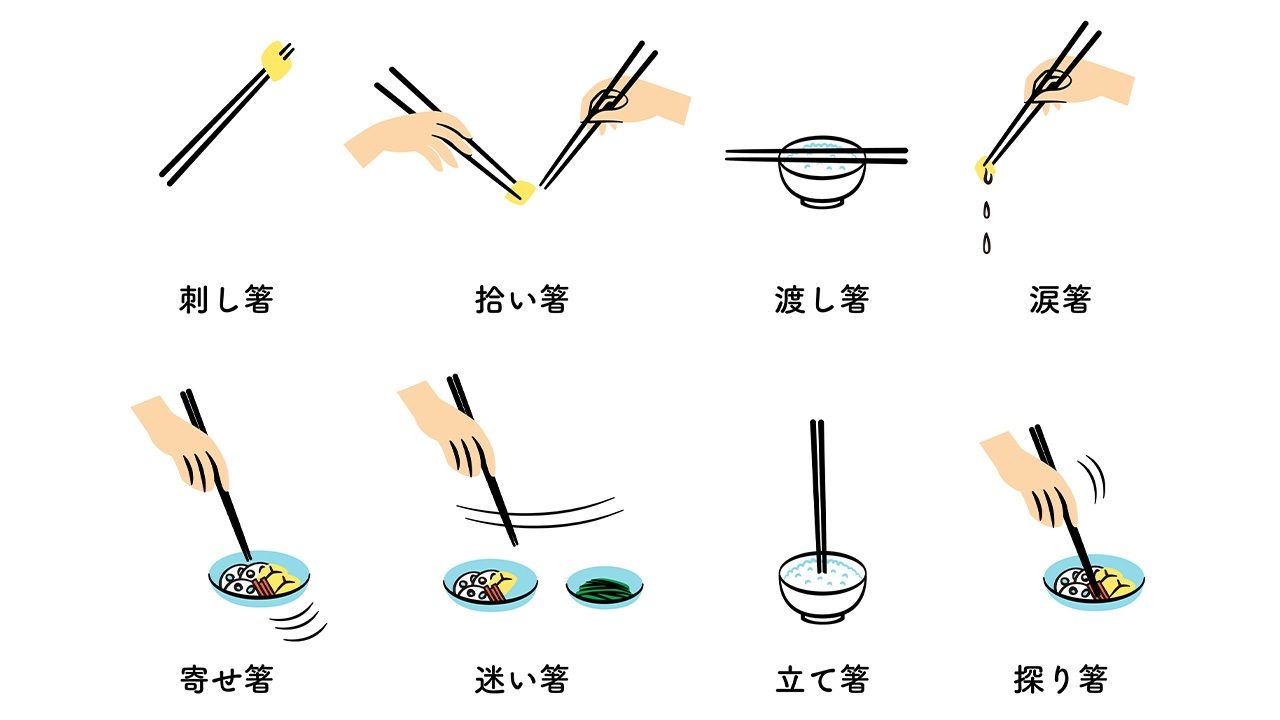
8. A Japanese Glossary of Chopsticks Faux Pas (www.nippon.com)
An overview of chopsticks gaffes that are best avoided when eating in Japan.

9. The Los Angeles Aqueduct Is Wild (practical.engineering)
[Note that this article is a transcript of the video embedded above.] On the northern edge of Los Angeles, fresh water spills down two stark concrete chutes perched on the foothills of the San Gabriel Mountains, a place simply called The Cascades. It’s a deceptively simple-looking finish line: the

10. Claude Code: Channels (code.claude.com)
Use channels to push messages, alerts, and webhooks into your Claude Code session from an MCP server. Forward CI results, chat messages, and monitoring events so Claude can react while you're away.
11. Super Micro Shares Plunge 25% After Co-Founder Charged in $2.5B Smuggling Plot (www.forbes.com)

12. HP realizes that mandatory 15-minute support call wait times isn't good support (arstechnica.com)
HP rescinds European support call strategy due to "feedback."
14. Wayland set the Linux Desktop back by 10 years (omar.yt)
15. Full Disclosure: A Third (and Fourth) Azure Sign-In Log Bypass Found (trustedsec.com)

16. We rewrote our Rust WASM Parser in TypeScript – and it got 3x Faster (www.openui.com)
We rewrote our Rust WASM Parser in TypeScript - and it got 3x Faster

17. Oregon School Cell Phone Ban: 'Engaged Students, Joyful Teachers' (portlandtribune.com)
There was plenty of uncertainty and debate about the effectiveness of a cell phone ban decreed by executive order last summer. But at least in Estacada, the policy has earned […]

18. Drugwars for the TI-82/83/83 Calculators (gist.github.com)
Drugwars for the TI-82/83/83+ Calculators. GitHub Gist: instantly share code, notes, and snippets.
19. Cursor Composer 2 is just Kimi K2.5 with RL (twitter.com)
21. Attention Residuals (github.com)
Contribute to MoonshotAI/Attention-Residuals development by creating an account on GitHub.
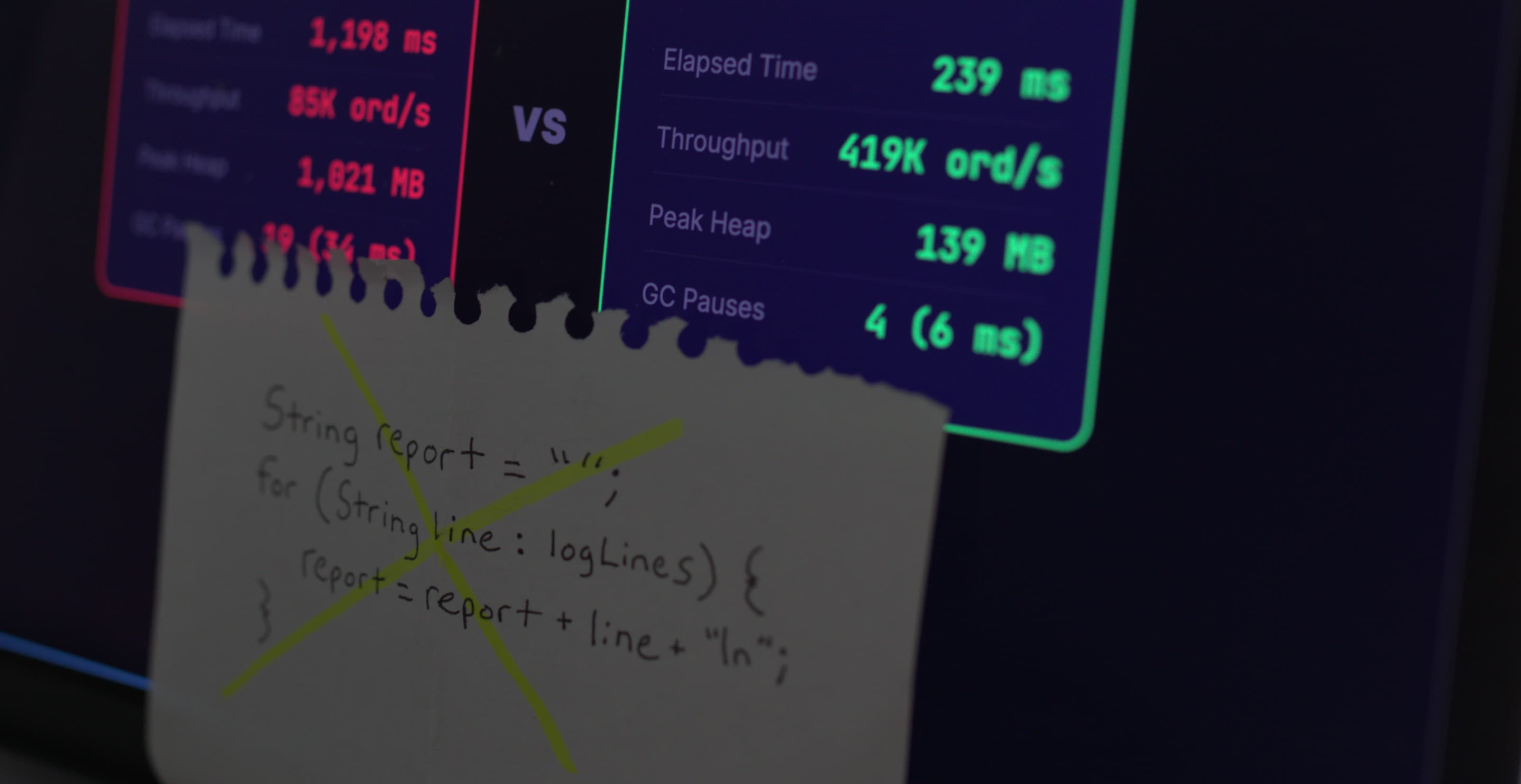
22. Java Is Fast. Your Code Might Not Be (jvogel.me)
Fixing common Java anti-patterns took an app from 1,198ms to 239ms. Eight patterns that compile fine and pass code review but silently drain CPU and balloon heap, with benchmarks and code fixes for each

23. Entso-E final report on Iberian 2025 blackout (www.entsoe.eu)

24. VisiCalc Reconstructed (zserge.com)
Building a minimal VisiCalc clone from scratch in C to understand how spreadsheets work.
25. The worst volume control UI in the world (uxdesign.cc)
26. Show HN: Sonar – A tiny CLI to see and kill whatever's running on localhost (github.com)
CLI tool for inspecting and managing services listening on localhost ports - RasKrebs/sonar

27. BYD's bet on EVs is paying off as drivers ditch gas amid rising oil prices (electrek.co)
BYD is already seeing a flood of new EV buyers as gas and oil prices surge amid rising tensions in...

28. Flash-KMeans: Fast and Memory-Efficient Exact K-Means (arxiv.org)
$k$-means has historically been positioned primarily as an offline processing primitive, typically used for dataset organization or embedding preprocessing rather than as a first-class component in online systems. In this work, we revisit this classical algorithm under the lens of modern AI system design and enable $k$-means as an online primitive. We point out that existing GPU implementations of $k$-means remain fundamentally bottlenecked by low-level system constraints rather than theoretical algorithmic complexity. Specifically, the assignment stage suffers from a severe IO bottleneck due to the massive explicit materialization of the $N \times K$ distance matrix in High Bandwidth Memory (HBM). Simultaneously, the centroid update stage is heavily penalized by hardware-level atomic write contention caused by irregular, scatter-style token aggregations. To bridge this performance gap, we propose flash-kmeans, an IO-aware and contention-free $k$-means implementation for modern GPU workloads. Flash-kmeans introduces two core kernel-level innovations: (1) FlashAssign, which fuses distance computation with an online argmin to completely bypass intermediate memory materialization; (2) sort-inverse update, which explicitly constructs an inverse mapping to transform high-contention atomic scatters into high-bandwidth, segment-level localized reductions. Furthermore, we integrate algorithm-system co-designs, including chunked-stream overlap and cache-aware compile heuristics, to ensure practical deployability. Extensive evaluations on NVIDIA H200 GPUs demonstrate that flash-kmeans achieves up to 17.9$\times$ end-to-end speedup over best baselines, while outperforming industry-standard libraries like cuML and FAISS by 33$\times$ and over 200$\times$, respectively.

29. MacBook M5 Pro and Qwen3.5 = Local AI Security System (www.sharpai.org)
Qwen3.5-9B scores 93.8% on 96 real security AI tests — within 4 points of GPT-5.4 — running entirely on Apple Silicon. Full benchmark results and methodology.